
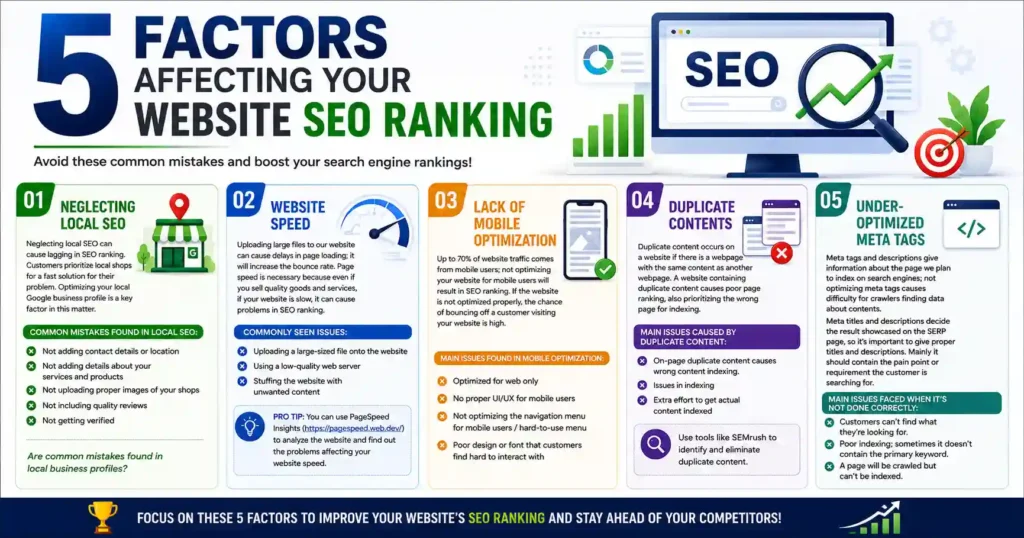
Search engine optimisation is the process of optimising and tuning your website to rank higher in Google search engine results pages. It’s an organic process that drives the intended audience to our website.
In search engine marketing, we pay money to rank higher on the search engine results pages. There are different types of advertising in SEM, which include search ads, display ads, YouTube ads, app ads, and shop ads. In comparison to SEO, search engine marketing brings results faster.
SEO is a long-term process; we need to do on-page SEO, off-page SEO, and technical SEO. It’s a gradual process. In on-page SEO, we do content optimisation, duplicate content elimination, keyword inclusion, optimising tags and keywords, adding a meta title and description, adding a canonical tag, schema, and OpenGraph. As for off-page SEO we do local directory listing, blog writing, and community question answering kind of things.
In search engine marketing, we have to research keywords; there will be a requirement to optimise web page speed and user experience. In some cases, we need to create landing pages if the website doesn’t perform well. In comparison to SEO, the chance of losing money is high if we don’t do proper research
Key differences between SEO and SEM
SEO
- Slow & long-term process
- Cost structure: invest in time
- Method: Organic Traffic
- Placements: Rank in the main non-ad section of SERP
- Trust and Credibility: More credible and trustworthy
- Flexibility control: Less control over content shown and indexed
SEM
- Immediate leads, start running within hours
- Cost structure: Invest in time
- Method: Paid Traffic
- Placements: Rank in the top or bottom of SERPs labelled as sponsored
- Trust and Credibility: Less Credible
- Flexibility control: High control and quick results